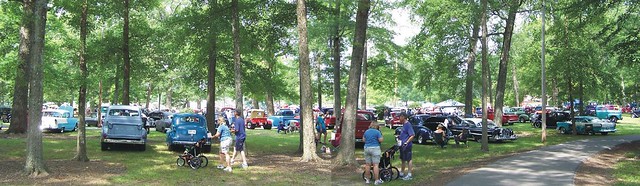
There was a time when, especially in rural America, most “commerce” was done not by exchanging cash money for goods you wanted but by trading something you had and could spare for something you needed. Many rural General Stores were simply barter centers where families who had chickens would bring eggs and trade them for butter and milk brought in by another family or for flour ground by the mill up the road.
These stores would have cloth, pots, pans and farming implements brought in from the more industrialized East, thereby being able to supply most of the needs the local families had. Cash transactions were accepted of course, but a large part of their trade was done through barter.
Rural life is still a lot like that. Swapping favors is one way we can help one another get things done without depleting our bank accounts. This goes beyond rallying around a friend who has something heavy to move because we know when we need help he will return the favor. For instance, I have the equipment and skills to do high end woodworking, Tim has a truck and trailer. Tim has often delivered my furniture pieces going “out East” for me, and I have built him furniture. Continue reading “Simply Swapping Favors and the Barter System”
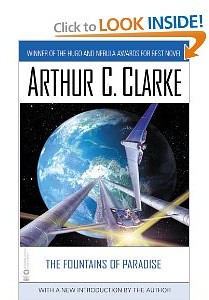 Arthur C. Clarke’s 1979 Hugo and Nebula Award winning novel, The Fountains of Paradise is Science Fiction’s definitive novel about the “space elevator,” or “Skyhook”. This concept enjoyed a brief period of enthusiastic interest among SF circles in the early 1980’s. The concept deals with an elevator (more like a monorail train car actually) that stretches from Earth’s surface to a space station in geosynchronous orbit, which would in turn serve as a construction, servicing and launching facility for ships voyaging to the moon, planets and even deep space. A primary plus was eliminating the need for expensive, inefficient, and environmentally unfriendly rocket launches from the ground. The whole idea seems incredible but is not outside the realm of engineering possibility. Clarke makes a strong case for the feasibility of such an unconventional project within the context of a completely engrossing story set mostly in the 22nd century.